Field Notes from Belize: Concordia’s Dr. Jen Janousek recounts sabbatical experience in Belize
January 31 to April 6, 2026
When people ask about my sabbatical in Belize, they usually ask the same question: "What did you do?"
I could talk about health education in schools, mobile clinics, home visits and public health research. Those things filled my days while serving with Hillside Healthcare in Punta Gorda. But when I think back on my time in Belize, it is the small moments and conversations that come to mind first.
These are a few field notes from my journey.
A Waiting Room Conversation
One morning I joined a mobile clinic in the Mayan village of San Jose. While patients waited to be seen, I spent time with Georgina, the community health worker. Together we talked with community members about diabetes and high blood pressure.
As we talked, the conversation turned to food. Eating healthy is not always easy when access is limited. The bus into Punta Gorda only runs a few days a week, and fresh fruits and vegetables can be expensive. It was another reminder that health is about much more than personal choices.
Before we left, Georgina asked if I could find pictures of measles for her to use in community education. Later that evening, I discovered how difficult it was to find images showing what measles looks like on darker skin tones. Even health education materials have blind spots.
Home Visits
Some of my favorite days were spent riding along with nurses on home visits. We traveled to homes of patients who could not make it to the clinic due to mobility issues. Many were living with diabetes and its complications and wound care was common. The work was not glamorous, but it was important.
What stood out to me was the relationships. The nurses knew their patients well. They knew their stories, their families and the challenges they faced. Care happened on porches and in living rooms. It felt personal in a way that healthcare often does not.
My role was often small, but meaningful. Sometimes it was simply holding a patient's hand while a painful bandage was changed. Other times it was helping in whatever way I could. During one visit, a grandmother was receiving treatment while her infant grandson cried from a stroller nearby. Using my limited Spanish, I asked if she would like me to hold him while the nurses cared for her. She smiled and seemed to appreciate that I tried speaking her language. She gladly took me up on my offer, and for a few minutes I rocked him while he settled down, and the nurses continued her treatment.
On another visit, I helped fill a pill organizer for a woman who was confused about when to take her medications. It was a simple task, but it reminded me that managing chronic disease is about much more than prescribing medicine. Understanding instructions, organizing medications and remembering what to take and when can be challenging, especially when someone is managing multiple health conditions.
The home visits also gave me a front row seat to the social determinants of health. In the classroom, we teach concepts like transportation, housing, income, food access and health literacy. On these visits, I saw those factors in real time. I saw how distance from care, limited transportation, financial challenges and everyday circumstances could affect a person's health and ability to manage chronic disease. Those lessons were impossible to learn from a textbook alone.
Those moments reminded me that healthcare is about more than procedures and treatments. It is about presence, relationships and helping people navigate the realities of everyday life.
Learning Without Worksheets
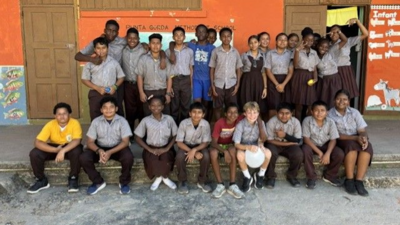
My 12-year-old son, Broxton, attended Punta Gorda Methodist School while we were in Belize. Our team visited his school monthly to teach lessons on hand hygiene, dental health, emotions, stress management and puberty. The students were eager to participate and full of energy.
One thing that fascinated me was the way students learned. Broxton told me, "We don't read much, but we write a ton." There were very few worksheets and textbooks. Students copied questions into notebooks and wrote their answers by hand.
What I remember most, however, is how warmly he was welcomed. As the only white student at the school, he stood out from day one. By the end of his first day, it seemed like everyone knew his name. Students went out of their way to include him, and his teacher showed incredible kindness as he adjusted to a new school, new classmates and a new culture.
Broxton quickly settled into Belizean school life. He loved the relaxed atmosphere, the time spent outdoors and especially the hour and a half lunch breaks. What could have been an intimidating experience became one of the highlights of our family's time in Belize.
On his final day, his classmates and teachers surprised him with a goodbye party. Watching him say goodbye to friends he had known for only a few months was a reminder that kindness transcends culture, language and geography. Different resources. Different systems. The same desire to learn, belong and be part of a community.
“When people ask about my sabbatical in Belize, they usually ask the same question: "What did you do?" I could talk about health education in schools, mobile clinics, home visits and public health research. Those things filled my days while serving with Hillside Healthcare in Punta Gorda. But when I think back on my time in Belize, it is the small moments and conversations that come to mind first.”
Around the Table
One afternoon I met with Hillside's Public Health Director and Medical Director to talk about health priorities in Toledo District. As we brainstormed, four issues kept coming up: traffic injuries, diabetes, cervical cancer and environmental concerns, especially plastics.
Some of the topics were expected. Others were not. Before arriving in Belize, I would not have guessed that road traffic injuries would be such a significant public health concern. Yet conversation after conversation reinforced the impact that transportation, road conditions, helmet use and access to emergency care can have on health outcomes.
The discussion reminded me that effective public health work begins with listening. It is easy to arrive in a community with assumptions about what the greatest needs might be. It is much harder, and much more important, to learn from the people who live and work there every day.
As a public health professor, I spend a lot of time teaching students how to assess community needs. Sitting around that table, I was reminded that community assessment is not just a classroom exercise. It starts with listening to the people closest to the work. The challenges may look different than those we face in Nebraska, but the work of public health is the same. Listen. Learn. Build partnerships. Work toward solutions.
Living Culture
One of the things I loved most about Belize was its diversity. Mestizo, Garifuna, Creole, East Indian, Chinese, Mennonite, Mopan Maya and Kek’chi Maya cultures all contribute to the country's identity. English is the official language, but it is common to hear people moving easily between Creole, Spanish and Indigenous languages.
While we were there, we attended a Mayan cultural festival that brought together traditional food, music and community celebration. It was a vivid reminder that Indigenous culture is not something preserved only in history. It is present, living and shared. We also attended Garifuna drumming performances. The rhythm was powerful and hard to describe in words. It felt like something that was both celebration and storytelling at the same time. Watching families and communities gather around the music gave me a deeper appreciation for how culture is carried forward.
For a country of just over 400,000 people, Belize is incredibly rich in culture and tradition.
Be a Local Citizen
One comment from a volunteer debriefing session has stayed with me.
"When you return home, go and be a local citizen wherever you live."
Simple words, but powerful. It reminded me that service is not something we do only when we travel. The opportunities to serve, advocate, and improve community health exist right where we live.
A Little Piece of Belize
By the end of our time in Punta Gorda, we had settled into a routine. One of our favorite places was Seahorse Café. We ate there often, my son spent hours fishing from the cafe dock and over time we got to know the owners and staff. What began as a place to grab a meal became one of the many places where we felt welcomed and known.
One morning, as I talked with Mr. Tommy, the restaurant's maintenance man, I shared how much I was going to miss my daily walks along the sea and the life we had built in Belize over the past two months. He smiled and said, "Take a little piece of Belize back with you, even if it's in your heart."
His words captured exactly how I felt. I came home with a deeper appreciation for the work being done by community health workers, nurses, teachers and local leaders. I came home with new ideas, new partnerships, and a renewed commitment to public health. Most of all, I came home grateful. Grateful for the people who welcomed my family, shared their stories, included us in their communities and made a place far from Nebraska feel like home. That may be the most important lesson Belize had to teach me.
About the Author
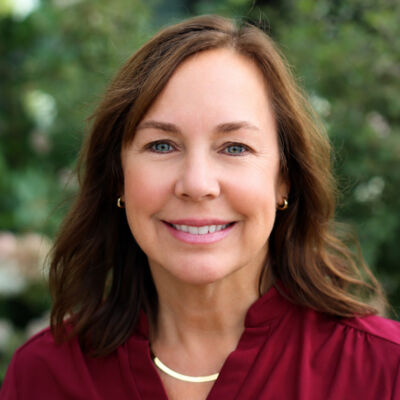
Dr. Jen Janousek has served at Concordia University, Nebraska since 2001, where she is a professor in the Health and Human Performance Department and currently directs the Master of Public Health program.
Meet JenniferInterested in Concordia University, Nebraska's MPH program?