Concordia’s Past, Present and Future
Story: Dr. Bernard Bull
Photos: Courtesy of Concordia Nebraska marketing
Rooted in God’s Word and a lasting commitment to Lutheran education, Concordia continues its mission of equipping students to serve Christ and shine forth His light.
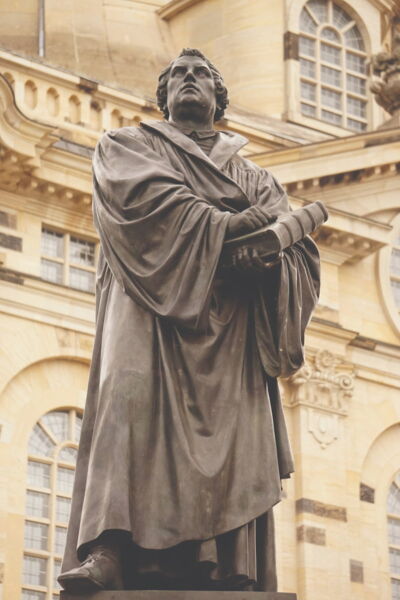
childrenI love telling Concordia's origin story, and I continue to learn new aspects of it over time. Yet, the origin of Concordia is much earlier than many realize. It started in a German university town called Wittenberg, which was a third the size of what Seward, Nebraska, is today. There lived an Augustinian monk whose mind and heart were transformed by the lamp of God's Word, including the life-changing message that we are saved by grace, through faith, in Christ, not by works, so no one may boast. The more Martin Luther read the Scriptures, the more he realized the truth and light of God's Word were being obscured by some of the church's teachings and practices he loved so dearly. So, this young monk and academic went to the door of the Castle Church in this university town and posted his 95 theses, an invitation to discuss and debate, commonplace in the medieval university.
Like Peter and John in the Book of Acts, Luther found himself compelled to stand firm and not go against his conscience that had been enlightened and shaped by the light of God's Word. "But Peter and John answered them, 'Whether it is right in the sight of God to listen to you rather than to God, you must judge, for we cannot help speaking about what we have seen and heard" (Acts 4:19).
Luther knew that an intense focus on and investment in education would be necessary. In 2 Kings 22, we learn of a time when the light of God's Word was lost to a people until Hilkiah, the high priest, discovered it and brought it to King Josiah. What followed was a time of repentance and a return to God's teachings.
Luther and his contemporaries found themselves in a similar time. They rediscovered the truth that had always been present in God's Word but had been lost in plain sight, and the light of the Word would be lost to future generations if there were not a concerted effort to teach the current and next generations. So, over the next few decades, Lutherans and others engaged in a series of efforts to make education and the teaching of the Scriptures a top priority. Luther translated the Bible into the language of the German people, but that also meant teaching people to read and learn from the Scriptures. He wrote the Small Catechism, a simple way for fathers to teach the faith to their households. Yet again, not all heads of households were literate, so a liberal arts education was part of this endeavor. Luther also wrote a letter to the noblemen, urging them to make Christian education (specifically schools where God's Word is present and prevalent) a top priority at all levels. In this sense, there is no Protestant Christian denomination in the history of the world that placed greater emphasis on primary, secondary and tertiary institutions of learning in which God's Word shed light on all aspects of life and study.
Those leading voices in the Reformation knew that an education where God's Word was paramount was important for the future of the church but also for Christian families, communities, workplaces and entire societies. This is a foundational philosophy of Lutheran education that shaped everything that followed, up to our present day.
As time passed, and German political leaders sought to bring unity by establishing a single national church, those who had been taught the clear truth of God's Word were unwilling to compromise their consciences. Because of this solid educational foundation in the Scriptures, these confessional Lutherans would rather permanently leave their generational home to find places where they could worship and raise their children according to their consciences. Instead of submitting to the Prussian Union, these Saxon Lutherans left, settling in South Africa, Brazil, Australia and the United States. They went to places where they could, in line with Luther's vision, establish Christian schools that would pass on the legacy of faith from one generation to the next.
For those who made a new home in the United States, establishing schools remained a top priority. This was so important to that first generation of confessional American Lutherans that, when The Lutheran Church—Missouri Synod (LCMS) was formed in 1847, one of the expectations of any congregation joining the LCMS was that they would start and maintain a Christian school. This was a fundamental practice for Lutheran churches. Christian education was a means of passing on the faith from one generation to the next and a compelling way to share their confession of faith with their neighbors and children.
C.F.W. Walther, the first president of the LCMS, gave an address at the “Laying of a First Foundation Stone of a College/Seminary in St. Louis in 1849.” In this speech, Walther clearly articulated the persistent Lutheran philosophy of education found in Luther's 16th-century writings: "…all human wisdom turns into foolishness when it arises as a critic against the divine wisdom of the Gospel, or to be its mistress over it."
Walther went on to say, "Yes, the church, far from banning its scholarly institutions from reading the classical authors of the heathen in some enthusiastic, narrow-minded attitude, much rather used these masterpieces of style, of form and of discrimination, out of which they formed their language curriculum and put them to use in developing peoples' discernment and taste...Yet, the service rendered by the church through the institution of her so-called catechetical schools internally, in the individual congregations, was an even greater means to a higher level of education for the common good of both the nations and the laity. While among the cultured heathen there were only schools for scholars in one subject, or for the children of the rich, the church first surfaced the necessity of people's schools. These grew up in the shadow of the church and of the Gospel, and, even now, this makes the Christian peoples unique among all the nations of the earth."
Walther’s vision for Christian schools as salt and light to our communities and nations was one in which the LCMS would sponsor schools at all levels and provide university education that rivaled the best in the world, preparing future pastors and teachers, but also equipping people to be salt and light in their families, churches, communities, roles of civic leadership, a myriad of workplaces and throughout the nations.
Your word is a lamp to my feet and a light to my path.
Luther, Walther and many who stood alongside them knew that the great treasure of the Gospel can be lost to a family or large segments of a nation in a mere generation if we do not treat the call to Christian education as among the highest of priorities. This conviction is so strong and persistent throughout history and within the families of faithful Lutherans that it is hard to imagine what confessional Lutheranism would look like without it.
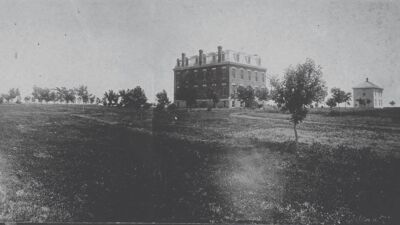
Here we finally arrive at the origin story of Concordia University, Nebraska. Less than 40 years after the formation of the LCMS, Lutherans living and worshipping on the plains of Nebraska experienced a massive drought so intense that relief efforts were enacted to help rural families survive from one day to the next. Farmers faced bankruptcy, while others struggled to feed their families each day. Yet they continued to pray for their daily bread, and each Sunday they gathered to receive Christ's body and blood, hearing the same clear Gospel message that was fought for during the Reformation, and that goes back to first-century Christians.
In the middle of such adversity, they trusted the wisdom of Deuteronomy 8 as quoted by their Savior in Matthew 4:4, "It is written, 'Man shall not live by bread alone, but by every word that comes from the mouth of God.’" Inspired by this truth, while still uncertain about their earthly challenges, many Lutheran churches and a select group of leaders from those churches in Nebraska gathered and agreed that they must take action today to ensure that God's Word is clearly taught to their children and those of future generations. From there emerged the Evangelical Lutheran School Teachers Seminary, now called Concordia University, Nebraska. Their first mission was to equip the next generation of teachers for current and future Lutheran schools that would continue to point people to God's Word "as a lamp unto our feet and a light unto our path." Establishing a teacher seminary was a top priority, and it remains one today, but in the earliest available Articles of Incorporation, the intent was clear.
"The purposes for which said corporation is organized are to cultivate and advance science, literature and art, and to establish, maintain, conduct and carry on a college, academy, seminary, normal school or either one or more of said educational institutions, at the city of Seward, Seward County, Nebraska which institutions are intended to afford classical, technical and religious instruction to young men and students who desire to prepare themselves for the ministry of the Lutheran Church and also to afford convenient and suitable educational advantages to the young whose parents or friends are identified or in sympathy with the religious teachings of the Lutheran denomination.1"
We were formed to raise up future teachers, and that extended to equipping people for other forms of full-time service in the church as well (pastors, deaconesses, directors of parish music and directors of Christian education). More broadly and in perfect alignment with the vision of Luther and Walther, we were created to honor and continue the legacy of faith that started at the baptismal font and was nurtured in the home and church, to provide an education that seeks to build upon rather than undermine the faith of our young people. We were created to be a learning community where we all point one another to Jesus Christ, the Lamb of God who takes away the sin of the world and to provide an education where God's Word is not only present but prevalent and paramount, taking authority over any and all other truth claims.
This is our history and legacy at Concordia University, Nebraska, and it is, by God's grace, our future. We added and removed majors and expanded our offerings to include new forms of extracurricular learning to foster character and faith formation. Yet, our mission today is the same as it was in our founding years. Not only that, it is the same mission articulated by those who came before us in the Reformation and those who helped form The Lutheran Church—Missouri Synod.
The foundation of Lutheran education is not a specific major or curriculum. It is the Word of God. Jesus proclaimed, "Heaven and earth will pass away, but my words will not pass away" (Matthew 24:35). God reminds us in Isaiah 55:11, "…so shall my word be that goes out from my mouth; it shall not return to me empty, but it shall accomplish that which I purpose, and shall succeed in the thing for which I sent it." And as the Psalmist reminds us in Psalm 119:105, "Your word is a lamp to my feet and a light to my path."
Concordia’s past, present and future converges in this one central purpose, to be a school where God speaks freely across all things through His Word, and that He works through His Word, because "All Scripture is breathed out by God and profitable for teaching, for reproof, for correction, and for training in righteousness, that the man of God may be complete, equipped for every good work" (2 Timothy 3:16-17).
And, looking to the Light of the World and holding firmly to the lamp of God's Word, we shine forth!
1Articles of Incorporation of Concordia (Seward, Nebraska), filed 1918, State of Nebraska, n.p.