Using the Arts to Support Learning in Early Childhood Education
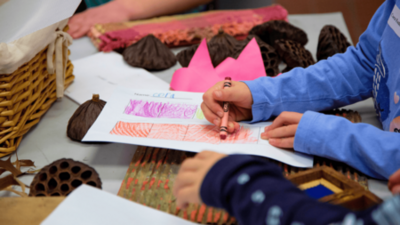
In early childhood education, learning happens through exploration, movement and creative expression. For children from birth through third grade, the arts are not an “extra,” they are a foundational way children make sense of the world. Music, movement, visual art and dramatic play support cognitive, social and physical development while creating inclusive learning environments for children of all abilities.
For educators working in early childhood settings, understanding how to intentionally use the arts can significantly enhance instruction and student outcomes.
Why Arts-Based Learning Matters in Early Childhood
Young children learn best when they are actively engaged. Arts-based learning aligns naturally with how children develop and grow, offering multiple ways to explore concepts and demonstrate understanding.
Research and classroom practice show that integrating the arts in early childhood education helps to
Strengthen early language and literacy skills.
Support social development and self-regulation.
Improve fine and gross motor coordination.
Increase engagement and attention.
Foster creativity and problem-solving.
For children who are still developing verbal skills, the arts provide essential nonverbal pathways for communication and learning.
Supporting Inclusion Through the Arts
Inclusive early childhood classrooms serve children with a wide range of abilities, learning styles and developmental needs. Arts-based instruction is especially effective ininclusive settings because it allows educators to differentiate instruction while maintaining shared learning experiences.
The arts support inclusion by
Offering multiple ways for children to participate and express understanding.
Reducing language and cognitive barriers.
Encouraging peer interaction and collaboration.
Building confidence and a sense of belonging.
Music, movement and visual expression can be easily adapted to meet individualized learning goals while keeping children engaged alongside their peers.
Arts Integration Across Developmental Domains
Intentional use of the arts supports development across all major early childhood domains.
Language and Literacy
Songs, rhythm, storytelling and dramatic play help children develop vocabulary, phonological awareness and narrative skills in developmentally appropriate ways.
Social Development
Art and dramatic play allow children to express emotions, practice empathy and develop self-awareness. Movement activities also support self-regulation and emotional control.
Motor Development
Drawing, painting, cutting, dancing and acting strengthen both fine and gross motor skills while reinforcing coordination and body awareness.
Cognitive Development
The arts encourage problem-solving, sequencing and critical thinking as children plan, create and reflect on their work.
Practical Ways Educators Can Use the Arts
Early childhood educators can integrate the arts into daily routines and academic content without adding complexity to their classrooms, such as by using music and rhythm to reinforce letter sounds or counting, using open-ended art materials to support creativity and fine motor growth, and encouraging dramatic play connected to stories, social skills or real-life experiences.
When arts integration is intentional, it enhances learning objectives.
A Faith-Informed View of the Whole Child
In faith-based educational settings, the arts also support a whole-child approach to learning. Creative expression honors each child’s unique, God-given gifts and encourages joy, curiosity and connection. Educators are called to nurture not only academic growth, but also emotional, social and spiritual development.
Preparing Educators to Lead Inclusive, Arts-Rich Classrooms
As early childhood classrooms become more diverse, educators need specialized preparation to design inclusive, developmentally appropriate learning experiences. Graduate-level training can help teachers deepen their understanding of child development, inclusion and arts-based instructional strategies.
Concordia University, Nebraska’s M.Ed. in Early Childhood Education Birth–3rd Inclusive
Concordia University, Nebraska offers a Master of Education in Early Childhood Education Birth–3rd Inclusive designed for educators who want to serve young children with excellence and compassion. The program emphasizes inclusive practices, developmentally appropriate instruction and the intentional use of strategies such as the arts to support learning for all children.
Grounded in a Lutheran worldview, Concordia Nebraska’s M.Ed. in Early Childhood Education Birth-3rd Inclusive program prepares educators to teach the whole child while partnering with families and communities. Graduates are equipped to lead inclusive early childhood classrooms, early intervention settings and related educational roles.
Interested in Concordia University, Nebraska's M.Ed. in Early Childhood Education Birth-3rd Inclusive?