Key Skills Coaches Need Today
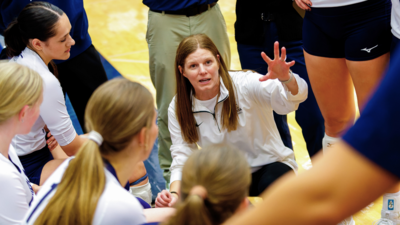
In today’s competitive and rapidly-evolving sports landscape, successful coaches must be effective communicators, mentors, leaders and culture builders, equipped to develop athletes both on and off the field. The Master of Science in Athletic Coaching (M.S.A.C.) at Concordia University, Nebraska is designed to prepare coaches with the modern skill set required to lead athletes with integrity, insight and impact.
Rooted in Concordia’s Lutheran foundation, the M.S.A.C. program approaches coaching as vocation, rather than simply a profession. Coaches see their work as a calling that integrates faith, purpose, service and leadership. This faith-centered model shapes coaches who invest in whole-person formation: mind, body and spirit.
This graduate program integrates leadership theory, sports psychology, ethics, analytics and athlete development into a practical, values-centered curriculum. Below are the key skills coaches need today and how Concordia Nebraska’s M.S.A.C. program intentionally develops each one through targeted coursework.
Communication & Leadership
Effective coaching starts with clear, consistent and motivating communication. Coaches must engage athletes, collaborate with parents and administrators and lead teams with confidence and clarity.
Courses that build this skill:
MSAA 500 – Leadership and Management in Athletics
Focuses on the development of a mission and vision statement, as well as organizational goals for your athletic department that align with your academic institution.
MSAA 599 – InsideOut Leadership
Delves into the core principles of authentic leadership, focusing on the development of character, values and purpose in your student athletes.
MSAC 604 – Serving & Leading in Athletic Coaching
Emphasizes servant leadership and values-based coaching philosophy.
These courses shape coaches who lead with humility, clarity, purpose and Christ-centered leadership.
Conflict Resolution & Ethical Decision-Making
Modern coaches must navigate conflicts involving athletes, parents, staff and institutions, often within complex legal and ethical environments. Knowing how to resolve disputes and make principled decisions is essential.
Courses that build this skill:
MSAA 520 – Ethical and Legal Aspects of Athletics Administration
Covers risk management, compliance, legal responsibilities and ethical leadership in athletics.
MSAA 599 – InsideOut Leadership
Reinforces values-based leadership and integrity-driven decision-making.
Ethical leadership is framed as a moral responsibility, forming coaches who lead with integrity and compassion.
Sports Psychology & Mental Performance
Mental resilience, confidence, motivation and emotional regulation are now recognized as performance drivers equal to physical training. Coaches must understand how athletes think, cope and grow.
Courses that build this skill:
MSAC 602 – Psychology of Coaching
Focuses on contemporary research and theories on motivation, mental resilience, group dynamics and the cognitive aspects of performance enhancement.
MSAC 601 – Theory of Coaching
Explores coaching philosophies, learning models and athlete-centered development approaches.
These courses prepare coaches to develop athletes mentally, emotionally and psychologically.
Character Development & Athlete Formation
Today’s best coaches shape people, not just players. Character formation, leadership development and personal growth are central to long-term athlete success.
Courses that build this skill:
MSAA 550 – High School Student-Athlete Development
Addresses the importance of using an athletic program as a vehicle to foster the physical, mental and spiritual development of athletes.
MSAA 560 – College Student-Athlete Development
Focuses on the importance of using an athletic program as a vehicle to foster the physical, mental and spiritual development of college athletes.
MSAC 604 – Serving & Leading in Athletic Coaching
Explores the vocation of athletic coaching through the lens of servant leadership, emphasizing the responsibility to serve athletes and foster their development holistically.
At Concordia, character formation is understood as a lifelong discipleship. Graduates learn to develop athletes not only as competitors, but as leaders, servants and people of faith who live out their vocation in every arena of life.
Team Culture & Program Building
Winning programs are built on strong culture: trust, accountability, belonging and shared purpose. Coaches must know how to intentionally create environments where athletes thrive.
Courses that build this skill:
MSAA 500 – Leadership and Management in Athletics
Provides insight into various leadership styles and techniques that can be utilized within an athletic department to ensure success.
MSAC 601 – Theory of Coaching
Explores coaching methodologies, advanced communication strategies and psychological theories to enhance athlete performance and well-being.
MSAC 604 – Serving & Leading in Athletic Coaching
Analyzes the intersection of professional growth, organizational leadership and service.
Graduates are equipped to build cultures rooted in respect, service, faith-informed leadership and long-term sustainability.
Data, Technology & Modern Coaching Tools
Analytics and technology now shape training, recruitment, performance tracking and strategy. Coaches must be fluent in modern tools and data-informed decision-making.
Course that builds this skill:
MSAC 603 – Sports Analytics and Technology in Coaching
Examines the integration of sports analytics and emerging technologies in the field of athletic coaching.
This ensures graduates are prepared for the future of coaching innovation.
Why These Skills Matter Now More Than Ever
Today’s coaches face unprecedented challenges. Transfer portals and Name, Image and Likeness (NIL) activities have transformed recruiting, retention and team stability. High school and college athletes face rising parental expectations, athlete burnout and mental health strain, and coaches encounter increasing complexity in ethics, compliance and athlete advocacy.
Coaches today must know how to manage change, lead through conflict, protect athlete well-being, build healthy cultures and navigate complex systems with integrity. The right M.S. in Athletic Coaching program can equip coaches not just to survive this new reality, but to thrive as they lead with clarity, confidence and purpose.
A Graduate Program Built for Modern Coaches
The Master of Science in Athletic Coaching at Concordia University, Nebraska offers a comprehensive, practical and mission-driven approach to graduate coaching education. By integrating leadership development, psychology, ethics, analytics, athlete formation and the Lutheran doctrine of vocation, the program prepares coaches to lead with excellence, compassion and purpose.
Whether you coach at the youth, high school, collegiate or professional level, this program equips you to:
Communicate effectively
Lead ethically
Build strong cultures
Develop resilient athletes
Use data and technology wisely
Shape character and leadership
If you're ready to grow as a coach and leader, Concordia Nebraska’s M.S.A.C. program provides the foundation to elevate your impact on the field and in the lives of your athletes.
Ready to take the next step in your coaching journey? Discover how Concordia Nebraska’s Master of Science in Athletic Coaching can help you grow as a leader, mentor and culture-builder.
Interested in Concordia University, Nebraska's M.S.A.C. program?