Trusting the Next Step
Story: Danielle Luebbe
Photos: Courtesy of Concordia Nebraska marketing
Professors and a Christ-centered community helped Doug Tewes discover a calling he never expected.
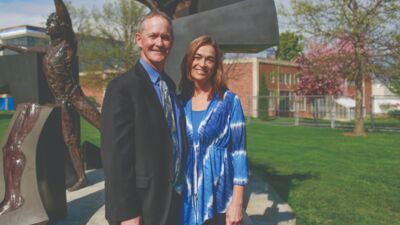
Dr. Doug Tewes ’83 did not expect to stay in Seward, Nebraska.
Growing up, he imagined college would be the time to leave, to head somewhere new and spread his wings. After graduating early from Seward High School, he enrolled at the University of Wisconsin-Green Bay and began what he assumed would be the next chapter of life away from home.
But the path he imagined was not the path that unfolded.
“God had some different plans,” Tewes said. “He put me exactly where he wanted me.”
He returned to Seward and enrolled at Concordia University, Nebraska. At the time, he didn’t know what career he would pursue. He only knew he loved the sciences. Tewes enrolled as a biology and chemistry student without a plan for what he wanted to do after college.
“Because of the influence of Dr. John Suhr and Dr. Robert Pflieger, I was challenged to consider a career in medicine, which had never been on my radar,” Tewes said.
Dr. Suhr encouraged Tewes to consider taking the MCAT. At the time, Concordia did not have a pre-med program. Tewes had no family background in medicine, little exposure to the field and no guarantee that he would succeed.
“As I recall, he kind of challenged me because I had taken most of the science classes offered at Concordia and the question was how would I fare on that exam and could I make it into medical school.”
The results came back during his senior year. He had received a high enough score to apply to medical school. Tewes had one week to prepare an application to the University of Nebraska Medical Center.
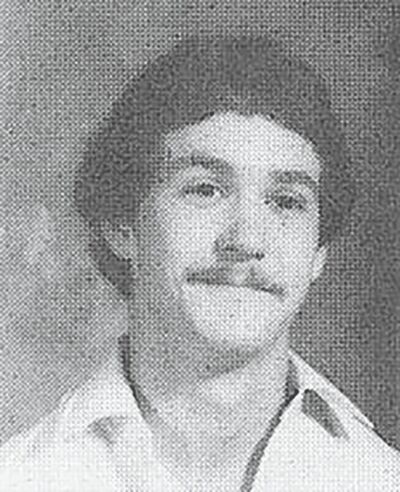
“That is just not the way you do it when you are trying to get into medical school,” Tewes said. “I had no background in medicine; the only person I knew in medicine was my primary care physician who I rarely saw growing up. I never shadowed a doc to learn about the career. On paper, I probably didn’t look like a very good candidate. But thankfully I had a couple of professors who saw something different for a possible career path for me. I do not think I ever would have come to it myself.”
That is what a Christ-centered, grace-filled education at its best can do: help students discover gifts they may not yet recognize in themselves.
“You cannot look back on any of this stuff and not recognize God's hand in the whole thing,” Tewes said.
Concordia Nebraska began as a teacher-training college. Preparing Lutheran educators was central to its mission and remains deeply important to our mission today.
But over time, serving the church and world required new pathways. Programs in church work, business, healthcare, agriculture, music and graduate education, among others, were added. The mission stayed the same; the opportunities grew.
Tewes said it was somewhat unusual in the early 1980s to be on Concordia’s campus and not be headed into church work. Many of his classmates anticipated receiving calls into ministry or education. His path looked different.
“I knew that each of my friends would be receiving a call to serve in the church, but I was given a different call to serve in the world of medicine.”
That understanding of vocation shaped everything that followed.
In medical school, while many students spoke primarily about career goals, Tewes answered differently when asked why he was there.
“I would get asked about why I went into medicine, and I would respond with something like ‘that’s where God wants me to serve people,’” he said. “It made getting through medical school a lot easier knowing I had a missional reason to be there.”
Today, Tewes is a board-certified orthopedic surgeon at Nebraska Orthopaedic Center and has served as team physician for the Bulldogs for 33 years. He remains closely connected to Concordia and continues to invest in its mission, including support for the Micah Scholars program.
Micah Scholars is designed for students preparing for careers in healthcare who want to use their God-given gifts to demonstrate the mercy of God in service to others.
Students pursuing healthcare vocations often feel pressure to choose the “perfect school” for pre-medicine or science. Tewes understands that concern, but he also sees what makes Concordia Nebraska distinctive.
“There are a lot of schools out there that can prepare a student for a career in medicine but in the state of Nebraska there is really only one school that intentionally does that preparation with a Christian worldview emphasis.”
He also knows the journey can be demanding.
You cannot look back on any of this stuff and not recognize God's hand in the whole thing.
“The Micah Scholars community recognizes the fact that medicine is academically, physically and emotionally challenging and having peers and professors to walk with you is really helpful.”
Students flourish when they are not walking alone. They thrive when faculty know them, peers support them and communities rally around shared goals.
Higher education will keep changing. New professions will emerge. Student expectations will shift. Technologies will develop. Needs in church and society will continue to grow.
Tewes and his wife Denise continue to support Concordia for a simple reason.
“The mission hasn’t changed and Concordia continues to wear Christ on its sleeves everyday,” he said. “That is worthy of all of our support as Concordia continues to educate servant leaders for the church and the world.”
That steady mission is what makes faithful growth possible. When the foundation is clear, new doors can open.
And when those doors open, future students can walk through them.
“The life path any of us take is the result of the combination of the skills God entrusts to us and the experiences he provides to us.”
And when the way forward feels unclear: “Hang on and trust that He will reveal it to you.”
A Tradition of Growth
Many of Concordia University, Nebraska’s strongest opportunities began as ideas that required courage, trust and vision. What once felt uncertain has helped shape Concordia’s mission for generations.
- 1919 - Welcomed female students to campus
- Late 1940s – Became a four-year institution and added business, art, science and health-related programs
- 1959 – First LCMS school to be accredited by the National Council for Accreditation of Teacher Education
- 1962 - Started a Director of Christian Education (DCE) program
- 1968 – Added graduate programs
- 1979 – Launched a colloquy program
- 1995 – Became part of the newly-established Concordia University System
- 1998 – Became a university
- 2018 – First scholar program launched
- Explore our scholars programs
- 2025 - Launched Studia Vitae continuing education courses
- Learn more about continuing education at Concordia
What once felt uncertain has helped shape Concordia’s mission for generations.