Concordia Nebraska hosts middle and high school science bowls for students across Nebraska
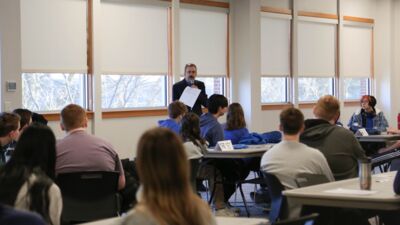
On February 7 and 28, Concordia University, Nebraska hosted more than 50 teams from over 30 middle and high schools in the state of Nebraska for the annual Middle and High School Science Bowls. Students attended from as far away as Wayne, Kearney and Alliance.
The Science Bowl is a competition that involves teams from two different schools competing to answer questions about biology, chemistry, physics, math, earth science and energy. Students compete to answer a “toss up” question first, and the student who answers correctly first earns the chance to answer a bonus question. The day starts with teams competing in four divisions in a round-robin tournament within each division to qualify for the afternoon double elimination tournament.
The winners of the competitions earn awards as well as an all-expenses paid trip to Washington, D.C., in April to compete against teams from across the country in the National Science Bowl.
The winner of the high school competition was Lincoln East High School Team 1 from Lincoln, Nebraska. The winning team at the middle school competition was Elkhorn Valley View Middle School from Elkhorn, Nebraska.
This is the fifth year that Concordia has hosted these Science Bowl events. The first year, 2022, was virtual due to COVID, but since then, Concordia has been able to bring over 300 students to campus annually to participate.
“Scientists have been blessed by God with the ability to do science, and they’ve been given the opportunity by their community to do science, and so we want to teach our students that the proper response to these gifts and opportunities is one of thankfulness and service. This event gives our students a chance to see that a life of science is also one of thankfulness to God and service to His people.”
Concordia professors of physics Dr. Robert Hermann and Dr. Brent Royuk help coordinate the event every year. Hermann said that the event is a good opportunity to serve students around the state while presenting Concordia to them as a place to continue their education.
“The Science Bowl is a great opportunity for very high achieving middle and high school students to learn science while also having the fun of competing,” he said. “For Concordia, it is a wonderful service opportunity for us to serve students from around the state. It’s also an opportunity for us to show off Concordia’s facilities, faculty, studentsand our science programs to students who either are or will soon be thinking about a place to go to college. We want them to see and to think about Concordia as a place where they can do science.”
As co-coordinators, Hermann and Royuk oversee the set-up of the events. They interact with the team coaches, help with registration and any questions they may have and set up the logistics for the event. On the day of the event, they are the face of the event. They greet teams, answer questions, resolve issues and give out awards. They also do all the scoring during the day.
The Science Bowl is a good opportunity for Concordia’s science students to practice serving others. Hermann stated that as a scientist, one of the most important aspects is giving back to the community. The Science Bowl allows Concordia science students to practice that skill. This year, over 150 Concordia students helped prepare for the event and assisted with the competition itself. Many faculty members from other departments also volunteered to help.
“Scientists have been blessed by God with the ability to do science, and they’ve been given the opportunity by their community to do science, and so we want to teach our students that the proper response to these gifts and opportunities is one of thankfulness and service,” said Hermann. “This event gives our students a chance to see that a life of science is also one of thankfulness to God and service to His people.”
The physical science program at Concordia University, Nebraska helps students develop the conceptual, analytical and technical skills they will need to be responsible, ethical leaders in their future classrooms, scientific professions or in graduate and professional schools so that they can help build a better understanding of the world and the role of science in the global community. Learn more here.